
Kalshi has filed to offer perpetual futures tied to individual US stocks, joining Coinbase in a push to bring crypto-style derivatives to traditional equity markets.
The prediction market filed the proposed rule change with the Securities and Exchange Commission and submitted it to the Commodity Futures Trading Commission (CFTC) for approval on Friday. The CFTC has yet to approve the proposal.
The proposed contracts would have no preset expiration date and would use periodic funding payments between long and short positions to keep their prices aligned with the underlying stocks. Kalshi said the contracts would be treated as security futures products and cleared through its CFTC-registered clearinghouse, Kalshi Klear.
The filing comes the same day Coinbase submitted a separate proposal to offer perpetual futures tied to individual US stocks, as both companies look to bring a derivatives product popular in crypto markets to traditional equities.
Kalshi already offers perpetual futures tied to cryptocurrencies in the US, including Bitcoin (BTC), Ether (ETH), Solana (SOL) and XRP (XRP), after receiving CFTC approval for its Bitcoin perpetual contract in May.
Related: DoubleZero adds Kalshi election market data ahead of US midterms
US stock perpetual futures race expands
Kalshi and Coinbase were not alone in filing to bring single-stock perpetual futures to the US market. Payward, the parent company of crypto exchange Kraken, also filed through its Bitnomial Exchange to offer the products, with plans to make them available to US traders on Kraken.
Payward said it plans to initially offer perpetual futures tied to 10 US equities, including Tesla, Nvidia, Apple, Microsoft and Amazon, and is working toward 24/5 trading.
The filings come days after the CLARITY Act failed to advance in the Senate on Sept. 15, falling short of the 60 votes needed to proceed.
A day after the vote, SEC Chair Paul Atkins said that “with or without legislation,” the agency would “act decisively” within its existing statutory authority to provide regulatory certainty for American investors and entrepreneurs.
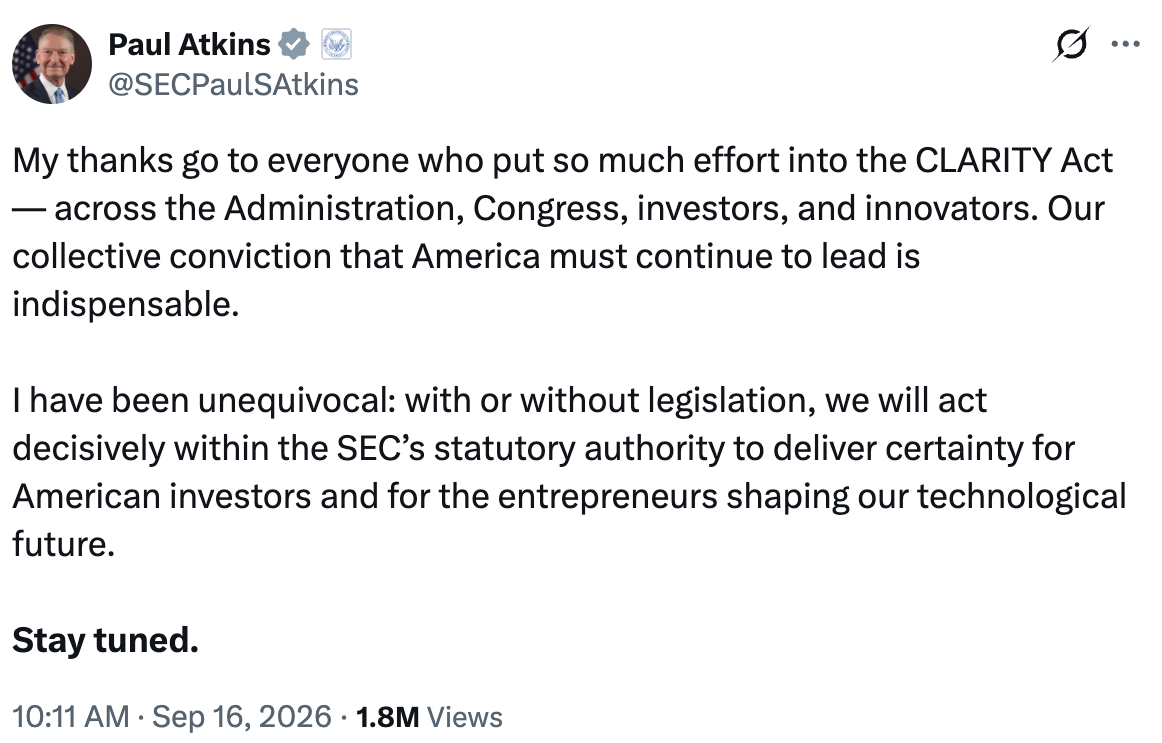
Source: Paul Atkins
Magazine: Is there any chance left to save the CLARITY Act?